
Special: Golden Pixiu · 2026 7th Bank-Insurance Cooperation and Development Forum
As room for fee competition shrinks, what will drive growth in the bancassurance channel? This is a question the industry must now answer.
On 2026年9月22日, the 7th Bank-Insurance Cooperation and Development Forum of "Golden Pixiu" · 2026, along with the award ceremony for bank-insurance series awards, was held in Beijing. Hosted by Yiqu Finance Media and "Insurance Enterprise High Reference", this year's forum centered on the theme "Offensive and Defensive Strategies: Harmonizing Light and Dust". Senior leaders from regulatory bodies, banking, and insurance sectors engaged in insightful discussions on the development of bank-insurance cooperation following "Document No. 65".
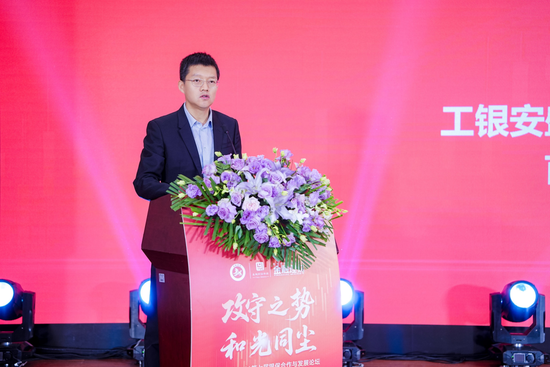
In the afternoon keynote session, Zhang Tao, Deputy General Manager and Chief Financial Officer of Aegon China Life Insurance, outlined a strategic shift from volume-driven contributions to value creation, anchored in three key transitions within the bancassurance market. He emphasized that the industry has entered a new era of value, where the old logic of prioritizing scale is fading. Zhang also stressed that transformation is not instantaneous and there are no shortcuts to value creation; the path forward must be anchored in value and driven by professionalism.
Three shifts in the bancassurance market
The legacy logic of scale contribution is being phased out.
In 3, the National Financial Regulatory Administration issued the "Notice on Further Strengthening the Management of Fees for Bank Agency Channels" (referred to in the industry as "Document No. 65"), requiring separate filing and management of four categories: commissions for bank-insurance channels, compensation incentives for bank-insurance specialists, training and customer service fees, and allocated fixed costs. Starting from 7/1, the upper limit for dividend insurance illustration rates was reduced from 3.9% to 3.5%, with corresponding tightening of pricing assumptions at the product level. According to industry exchange data, new single-premium payments via bank-insurance channels in the first half of 2026 totaled approximately 2694 billion yuan, representing year-over-year growth of about 10%. The growth rate of single-premium payments decelerated monthly from 34% in 1 to around 10% in the first half of the year, widening the divergence between scale and value over the past year.
Zhang Tao openly noted that he shared his market insights at this forum last year, and a year later, the market's trajectory is validating those assessments. His core judgment is that bancassurance has entered a new era of value: while the past decade focused on scale, the next decade will prioritize value. Zhang believes current market shifts center on three key transitions.
The most direct shift lies in regulatory direction. The "reporting and execution alignment" policy and the dynamic adjustment mechanism for assumed interest rates are reshaping industry competition rules. Over the past year, this combination of measures has deepened significantly. Following the issuance of "Document No. 65," expense management and product pricing in the bancassurance channel have become more standardized, substantially narrowing the scope for fee-based competition and refocusing competitive efforts on professionalism and quality. Zhang Tao emphasized that compliant operations and meticulous management have evolved from value-added advantages to mandatory entry requirements. Relying on fees to drive scale has reached its limit; winning customers through professionalism is now the only viable path.
Shifting interest rate environments are also reshaping business logic. Zhang Tao notes that while last year's industry discussions focused on the pressure of falling rates, this pressure has now evolved into a sector-wide commitment to operational discipline. Controlling liability costs has become a shared consensus; the extensive, scale-driven growth model is no longer sustainable. Asset-liability matching is becoming a foundational competency for insurers. On the product side, there is an accelerated shift toward floating-rate protection products. Coordinating pricing with investment strategies now demands even greater patience and resolve than ever before.
The shift in customer needs is the third transformation. According to the "2025 National Aging Development Bulletin," as of the end of 2025, China's population aged 60 and above reached 3.23 billion, accounting for 23.0% of the total population. Zhang Tao noted that with deepening population aging and rising demand for family wealth management, insurance-banking products are expanding from simple savings growth to comprehensive solutions covering retirement, health, protection, and inheritance. A single policy can no longer meet these needs, shifting sales models from one-time transactions to long-term companionship.
Three forces are converging toward a single conclusion. Zhang Tao believes the old logic of growth driven by scale is fading; creating value has become essential for bancassurance development. The industry faces a comprehensive restructuring of its growth model, partnership approach, and foundational capabilities. Whoever shifts the foundation of growth from scale to value first will gain the initiative in the next cycle.
Value creation requires systemic action.
Supported by Products, Expertise, and Collaboration
Once the direction of transformation is set, the metrics for measuring it also change. According to data from the China Insurance Association, in the first half of 2026, gross premiums written on participating insurance policies reached 10126 billion yuan, up 94.4% year-over-year, accounting for more than 60% of new individual life insurance sales. The reference value for the预定 interest rate on ordinary life insurance products rose to 1.94% in the second quarter, marking two consecutive quarters of recovery; this stabilization in pricing conditions has created a window for shifting product structures. While scale-related indicators have cooled, periodical payment and value-driven metrics are on the rise.
Zhang Tao believes that value creation cannot remain at the conceptual level; it must be translated into systematic transformation actions. Building a value community among banks, insurance companies, and customers relies on three pillars: product transformation as the foundation, professional capability as support, and bank-insurance collaboration as assurance. Over the past year, ICBC-AXA has turned value creation into actionable, measurable, and verifiable initiatives through four key transformations.
Assessment priorities dictate team actions. Zhang Tao noted that quality metrics such as new business value now hold greater weight in evaluations, with resource allocation shifting toward value-driven businesses. This steers frontline teams from focusing solely on premium volume to prioritizing value creation, making it the shared language across all lines of business. Branch evaluation criteria have also shifted from premiums to focus on value, structure, and workforce development.
Product structure represents another key pillar of the transformation. Zhang Tao highlighted that the company is steadily increasing the proportion of protection and pension products while advancing the transition to participating products. By proactively managing spread risk, the company balances customer return expectations with risk control through a "guaranteed returns plus floating dividends" structure. High-leverage protection products such as level-term whole life insurance have become a critical component of this diversified product mix. The Xinfu Chuanjia series focuses on clients' needs for wealth succession, asset preservation, and risk isolation. Despite pressure on overall premiums and value this year, new business value from this series grew counter-cyclically, serving as a vital driver of the company's high-value business transformation.
The synergy between distributors and banks determines how far value creation can go. According to Zhang Tao, companies should partner with banks to segment customers, tailor differentiated products and services for each group, boost productivity at key branches, and deliver joint training. This transforms the relationship from simple product distribution into a long-term mechanism for co-managing customers and sharing growth outcomes.
Building professional expertise requires patience. Zhang Tao emphasized that the company is focused on integrating team capabilities, transforming individual practical experience into organizational capability—turning one person's know-how into the collective strength of the entire team. On the technology front, AI empowers business operations in two key ways: First, it enhances marketing by using digital tools to assist with policy diagnostics and coverage gap analysis, improving frontline precision service. Second, it boosts training through intelligent learning platforms that deliver scenario-based exercises, enabling rapid growth in real-world settings. This ensures that professional expertise becomes the primary driver of productivity growth.
These actions' effects are reflected in our operations. Zhang Tao stated that the value contribution from our bancassurance business has steadily increased, with a rising proportion of protection-oriented and high-value products. This has enhanced the quality and resilience of growth, providing solid support for our company's stable operations in a complex market environment.
Strategic Refocusing
Redefining growth, collaboration, and professionalism.
Bank-side changes are also driving adjustments in collaboration models. According to regulatory data, commercial banks' net interest margin was 1.41% in Q2026, up 0.01 percentage points from the previous quarter—the first sequential increase since 2022. The importance of non-interest income has grown, and banks are shifting their expectations for partner insurers from product supply to customer management and professional service capabilities. Industry exchange data further shows that growth momentum in bancassurance channels is transitioning from fee-driven to value-driven.
Zhang Tao believes that strategic reconstruction ultimately redefines the three fundamental questions of growth, collaboration, and expertise.
Growth requires redefinition. Zhang Tao emphasized that bancassurance must shift from selling products to delivering services. By providing comprehensive solutions covering retirement, health, protection, and wealth transfer throughout the customer's entire lifecycle, insurance services can be seamlessly integrated with bank wealth management. This approach replaces one-time transactions with long-term customer engagement.
Partnerships need to be redefined. Zhang Tao emphasized that bancassurance cooperation must shift from channel-based collaboration to a value-driven community. Together with banking partners, we will build customer management and training enablement systems. Our shared interests are rooted in customer value, creating a win-win outcome for banks, insurance companies, and customers.
Professionalism needs to be redefined. Zhang Tao stated that industry drivers must shift from cost-based to capability-driven models. The value of professional excellence remains timeless. The company will continue to enhance productivity through workforce specialization and digital transformation, ensuring growth relies more on professional expertise and service quality. Our professional moat must become deeper and stronger.
According to Zhang Tao, the transformation of the bancassurance industry will not happen overnight, and there are no shortcuts to value creation. The direction is clear: anchor on value and grow through expertise. ICBC-AXA will remain committed to its core mission of creating value by serving customers, delivering returns to shareholders, empowering employees, and giving back to society. Together with industry peers, we will drive bancassurance business toward a new stage that is more standardized, more valuable, and more sustainable.
Source: Insurance Experts


