
(Source: Beijing Business Today)
When an insurer holds 5% or more of a publicly listed company's shares, it triggers a "public disclosure" (commonly known as "raising the flag")—a milestone long regarded as a strategic signal from insurance capital in the capital market. In recent years, such disclosures have become one of the most talked-about capital movements, with dozens of instances drawing intense market attention to every move by this "long-term money."
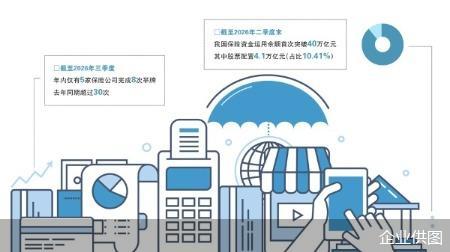
However, as Q3 2026 comes to a close, the data is striking: only 5 insurers completed 8 block trades year-to-date, compared to more than 30 at the same time last year. From "high-frequency buying" to "precision investing," what transformation is insurance capital undergoing in the equity market?
Tendered only 8 time(s) this year
There were 4 incidents in Q1, dropping to 1 in Q2, and stabilizing at a rate of 1 per month in Q3. On the timeline, this year's pace of insurance capital taking stakes was significantly slower than the same period last year. Looking back, during the first three quarters of 2025, over 10 insurance companies took stakes more than 30 times in total, whereas this year's count is less than 30% of last year's.
In 1, CPIC Life increased its stake in Shanghai Airport, marking the first "blockholder" move by insurance capital this year. According to an announcement published by CPIC Life on the website of the China Insurance Association, CPIC Life acquired an additional 7242.4 million shares of Shanghai Airport via block trade. Following the increase, CPIC Life, along with its related parties and acting in concert with CPIC Asset Management, now holds approximately 1.24 billion A-shares of Shanghai Airport, representing 5% of the company's total A-share capital.
Since then, Ping An Life has been the most active insurer, making 4 block trades this year—all targeting H-shares. The targets include Agricultural Bank of China, China Merchants Bank, and China Life Insurance, with China Life being targeted twice. Additionally, Fude Property & Casualty made a block trade in Yakang Shares, and Li'an Life did so in Zhongshan Public Utilities.
The most recent instance occurred in 9. On 9/29, Xinhua Insurance announced its acquisition of H-shares of AVIC Industry. Prior to this change, the company held 3.04 billion H-shares of AVIC Industry, accounting for approximately 4.89% of the listed company's total H-share capital. On 2026/9/22, Xinhua Insurance increased its holdings by 1687.6 million unrestricted tradable H-shares through centralized bidding on the secondary market, representing about 0.27% of the listed company's issued H-share capital. Following this transaction, Xinhua Insurance holds a total of 3.21 billion H-shares of AVIC Industry, or approximately 5.17% of the listed company's H-share capital.
As a key institutional investor, insurance capital's block trades inject fresh liquidity and boost market confidence, thereby supporting the real economy through the capital market. This year's block trade targets span sectors including banking, insurance, transportation, public utilities, as well as computing infrastructure and aviation technology.
Regarding the notable year-over-year decline in public shareholding announcements, Jiang Han, Senior Researcher at Pangulu Think Tank, analyzed that: First, by 2025, insurers' equity allocation had already reached a high base; large-scale public shareholdings would significantly deplete solvency capital, prompting institutions to naturally cool down. Second, the substitution effect of diversified equity instruments is emerging—tools such as ETFs, strategic placements, and negotiated transfers offer greater flexibility with lower capital consumption. Third, insurers' investment logic has shifted from short-term bulk buying to long-term, targeted positioning.
Financial commentator Guo Shiliang also noted that the decline in insurance capital taking significant stakes may be linked to market conditions, stock valuations, and asset allocation needs. Compared to previous years, the valuation of certain core assets, such as bank stocks, has risen significantly. After substantial price increases, the investment value proposition for bank stocks and other core assets has diminished, leading to a cooling of insurance capital's willingness to increase holdings.
Equity investment positioning remains broad.
Insurance capital typically holds positions for longer periods, making its investment focus and scaling trends a subject of close attention.
According to the latest data from the National Financial Regulatory Administration, as of the end of Q2 2026, China's insurance fund utilization balance surpassed 1 trillion yuan for the first time, with stock allocations reaching 4.1 trillion yuan (accounting for 10.41%). While the scale has reached a new level, the intensity of equity allocation by insurance funds continues to increase. As of the end of this year's second quarter, the proportion of stock allocations reached 10.41%, the highest level since regulatory disclosure began, and has increased quarter-over-quarter for 8 consecutive quarters.
Beijing Business Today noted that while the pace of insurance capital making block trades slowed this year, its involvement in equity market investments did not contract. This includes direct share purchases and block transfers on the secondary market. More notably, interest is rising among insurers participating in strategic placements and cornerstone investments for IPOs. For instance, 4 insurers, including China Life, appeared on the strategic placement list for Changxin Technology.
Additionally, insurance capital is increasingly appearing in the tech innovation sector, spanning both primary and secondary markets.
Regarding future allocation strategies for insurance capital, Jiang Han stated that: First, high-dividend, low-volatility sectors remain the core foundation. Stable cash flows from banking, utilities, and transportation align precisely with the long-term liability needs of insurance capital, attracting continued inflows. Second, sectors related to new quality productive forces offer growth potential. Hard-tech areas such as aviation technology and computing infrastructure meet long-cycle performance requirements and provide long-term return elasticity to portfolios. Third, the investment value of Hong Kong stocks continues to unfold. With expanded channels for overseas deployment by insurers, high-dividend leaders in Hong Kong will become a key focus. Future investments will shift toward a stable model emphasizing low volatility, low resource consumption, and structural priority.
According to Guo Shiliang, as the market corrects, valuation advantages of core assets are increasingly becoming apparent. Sectors such as insurance, securities, home appliances, and liquor have gradually become attractive investment opportunities, likely encouraging greater accumulation by insurance funds.
From shareholding to ETFs, from strategic allocations to industrial funds, the presence of insurance capital in equity markets remains strong—it has simply adopted a different approach. Jiang Han expects that while shareholding activity may not return to high-frequency levels, it will maintain a low-frequency, industry-focused character, with targets expanding into hard technology and public utilities. Guo Shiliang also believes that, from a medium-to-long-term perspective, A-share core assets remain highly competitive, with valuations and dividend yields still offering attractive advantages for insurance capital.
Beijing Business Today reporter Hu Yongxin


