
Another insurance company has taken a stake in a listed firm. Xinhua Insurance announced recently that it acquired shares of AVIC Industry Holdings Limited (H-share).
Holding shares in listed companies is one of the key strategies for insurers in equity investments. Overall, in the first three quarters of this year, 5 insurers collectively held shares in listed companies 8 times (based on announcement dates). While the number of holdings declined significantly year-over-year, insurers' overall allocation to equity assets increased rather than decreased.
Respondents believe that the trend of insurers increasing equity allocations continues, though its specific form varies across market conditions. Insurers are expected to continue boosting their equity positions in the future.
Decrease in bid count
On 9 29, New China Life Insurance announced that on 9 22, it increased its holdings of 4.5 million non-restricted ordinary shares of AVIC Industry through centralized bidding transactions in the secondary market. Following this change, New China Life Insurance holds a total of 3.21 billion H-shares of AVIC Industry, accounting for approximately 5.17% of the company's H-share capital.
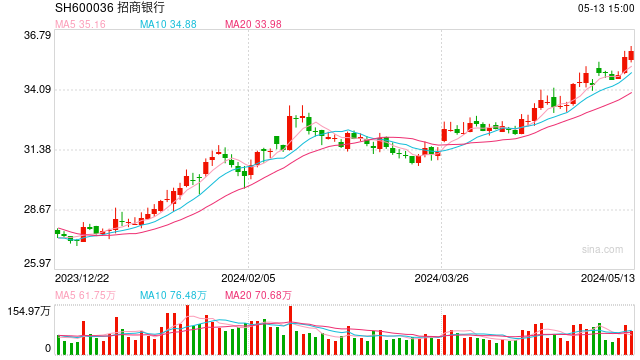
This is the latest case of insurance capital acquiring stakes in listed companies this year, bringing the total number of such acquisitions in the first three quarters to 8, involving 5 insurance companies. Ping An Life Insurance was the primary acquirer, making 4 moves, including 2 stakes in China Life Insurance H-shares and 1 stakes each in Agricultural Bank of China H-shares and China Merchants Bank H-shares. Meanwhile, CPIC Life, Fude Property & Casualty, and Lianan Life acquired shares in Shanghai Airport, Yakang Shares, and Zhongshan Public Utility, respectively. Overall, insurance companies have targeted listed firms across sectors such as insurance, banking, public utilities, and transportation, utilizing methods like block trades, agreement transfers, and secondary market competitive bidding.
Compared to the same period last year, both the number of insurers making public offers on listed companies and the total number of such offers have declined significantly. Last year, 13 insurers made public offers on listed companies a total of 31 times.
Zhang Lingjia, President of Guangdong Kaili Capital Management Co., Ltd., told the Securities Daily: "On one hand, insurers completed significant allocations to high-dividend assets last year with frequent tender offers; this year, such activity has naturally declined as focus shifts from 'rapid volume growth' to 'steady optimization,' resulting in a year-over-year drop in tender offer frequency. On the other hand, insurer capital allocation has expanded beyond traditional high-dividend assets into frontier sectors like semiconductors, AI, and biomedicine, increasingly participating via strategic placements and industry funds rather than through secondary market tender offers."
Zhou Jin, Partner at Tianzhi International Financial Services Consulting, told Securities Daily that insurance capital's market entry strategy has shifted noticeably this year. The key trend is moving from "blockbuster takeovers in secondary markets" to "pricing shares at IPOs or pre-IPO rounds," with the role evolving from "financial investor" to "strategic investor." Investment focus has also pivoted from high-dividend banks and infrastructure stocks to hard-tech companies representing new quality productive forces. Consequently, compared to the same period last year, the number of insurance capital blockbusters in secondary markets has dropped sharply.
Zhou Jin further analyzed that these changes stem from both internal factors within insurance companies and external environmental influences. On one hand, insurers are actively promoting floating-return products, reducing their short-term rigid requirements for yields. This allows them greater patience to make early investments and wait for company listings, aiming for higher long-term returns. Additionally, through IPO fixed-price strategic allocations, insurers can classify investments as FVOCI, helping to mitigate the impact of profit fluctuations. From an external perspective, the deepening of long-cycle assessment mechanisms, the opening of listing channels for high-tech enterprises, and the transparency and standardization of Hong Kong IPO cornerstone investment rules have all created favorable institutional and regulatory conditions for insurers to adjust their market entry strategies.
Continue increasing equity asset allocation
Although the frequency of insurance companies acquiring stakes in listed companies dropped significantly year-over-year in the first three quarters, their overall equity asset allocation continues to grow steadily.
According to the latest data from the National Financial Regulatory Administration, as of the end of Q2 2026, the combined holdings of stocks and securities investment funds by insurance companies reached 6.39 trillion yuan, accounting for 16.23% of total assets under management—marking a record high in both scale and proportion.
"The money hasn't left; it has simply shifted from shares in listed companies to more flexible channels," said Zhang Lingjia. By maintaining low exposure and diversified holdings, insurers aim to ensure a stable financial statement.
A senior executive from a life insurance company told the Securities Daily that, amid persistent low interest rates, fixed-income asset returns are under pressure. Insurers should increase equity allocations to boost portfolio returns while balancing yield against volatility and drawdowns. The company's equity allocation has risen steadily, deployed in a staggered, diversified manner. Guided by principles of avoiding chasing highs and panic selling, it treats market volatility as rebalancing opportunities. Structurally, it is increasing the weight of long-term high-dividend assets while limiting concentration in growth sectors.
A senior executive at Everbright Sun Life Asset Management Co., Ltd. told The Securities Daily that the company is closely integrating its insurance liability advantages with secondary market investments. Its asset allocation strategy is built on a dynamic asset-liability management approach, targeting high-quality investment opportunities that offer stable returns, controlled risk, appreciation potential, and reliable cash flow to enhance long-term, consistent earnings.
In Zhou Jin's view, the positioning of insurance capital as "patient capital" and its long-term allocation model remain unchanged. Equity positions continue to rise, the "fixed income+" strategy will persist, and efforts to enhance returns by leveraging equity market opportunities will not change.
(Source: Securities Daily)