
You don't need to cut down trees for forests to generate revenue. Carbon dioxide absorbed by forests, once measured and verified, can be issued as forestry carbon credits. These credits are monetized through corporate subscriptions and carbon offset purchases for large-scale events. In response to this emerging business model, insurers are now participating in both stages: providing risk coverage for forests and carbon sinks, and investing directly in purchasing carbon credits.
Recently, a reporter from The Paper learned during an investigation in Chizhou, Anhui, that China Pacific Property Insurance purchased Anhui's forestry carbon tickets in two batches to meet carbon neutrality needs for scenarios such as the China International Import Expo (CIIE). Meanwhile, CPIC Property Insurance's Anhui branch has piloted commercial forest carbon sink remote sensing index insurance in Anqing, Lu'an, and Wuhu, exploring coverage for forest carbon sink losses.
For forest farms, the key practical challenges when adopting this new business are whether carbon tickets can be sold and what concerns buyers have.
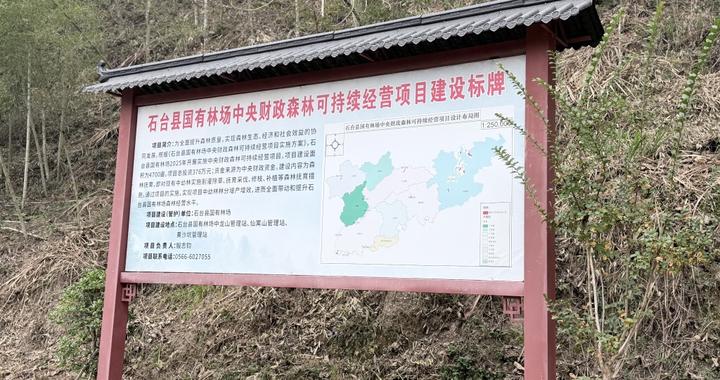
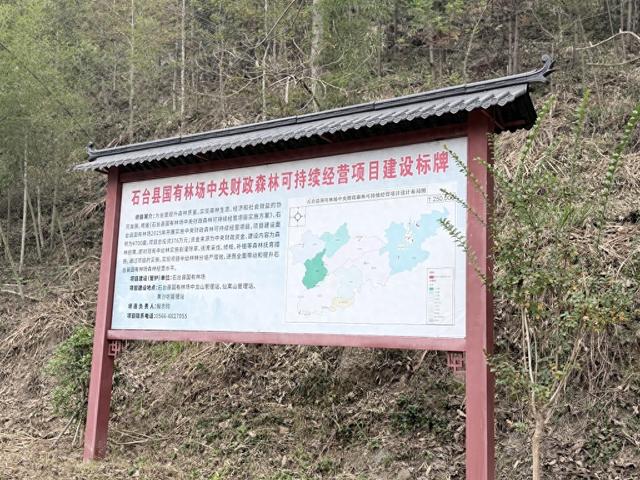
According to Yin Zhijun, director of Shitai County State-owned Forest Farm, forest fires, pests and diseases, and extreme weather can cause carbon sink losses—key risks that buyers are concerned about. The farm aims to partner with insurance providers to mitigate these risks, boost buyer confidence, and expand channels for carbon ticket absorption.
A forestry carbon ticket is a rights-based instrument that quantifies the amount of CO₂ absorbed by a forest over a specified monitoring period. After measurement and verification according to prescribed methods, it can be used for trading, offsetting, financing, and more. This transforms forests into tradable ecological products and expands the scope of coverage for insurance protection.
A representative from a relevant department of CPIC Property Insurance Anhui Branch stated that traditional forest insurance and carbon sink insurance are complementary and cannot simply replace each other. Traditional forest insurance primarily covers damage to timber, while carbon sink insurance addresses issues such as reductions in carbon sink storage and losses in carbon sink value. Different products correspond to distinct coverage targets and risks. Product design requires consultation with forestry farms and growers to determine coverage plans based on their specific needs. Pricing must incorporate multi-year historical disaster data for the region to analyze risk probability and loss scenarios, while also considering factors like sum insured.
The Paper reports that CPIC Property & Casualty will deploy a comprehensive suite of products—including policy-based forest insurance, forestry carbon sink index insurance, and carbon sink value loss insurance—leveraging meteorological data, satellite remote sensing, and risk monitoring to deliver disaster early warnings, loss prevention, post-disaster assessment, and economic compensation for forestry operators.
In addition to providing guarantees, the insurance company will also become a direct buyer of carbon credits.
CPIC Property & Casualty Insurance has acquired its first batch of forestry carbon tickets from six cities—Chizhou, Anqing, Lu'an, Xuancheng, Huangshan, and Chuzhou—to offset a portion of the carbon emissions from the 9th China International Import Expo (CIIE). All procurement costs are covered by CPIC P&C, with no additional fiscal burden on government budgets. Funds will be directed to carbon ticket sellers and forestry operation entities.
A representative from Taiping Property & Casualty Insurance stated that for large-scale events to achieve carbon neutrality, an implementation plan must first be established. Emissions should then be quantified by an independent third party and offset using carbon assets such as carbon credits, with a carbon neutrality certificate issued by the relevant authority. Moving forward, the company plans to leverage its participation in events like the China International Fair for Trade in Services (CIFTIS) and the China Investment Promotion Conference (FICCI) to continuously connect with Anhui's forestry carbon sink supply.
Regarding revenue from carbon credit trading, Jiang Xiaodong, Deputy Director of the Shitai County Forestry Bureau in Chizhou City, told The Paper that local carbon credits have been absorbed through ecological justice mechanisms and corporate subscriptions. All proceeds are reinvested into forestry operations, including forest tending, low-efficiency forest transformation, and ecological protection.
Yi Rui, head of the Anhui Forestry Bureau's Carbon Sink Task Force, told The Paper that a key goal in developing forestry carbon sinks is generating income for forest farms and farmers without depleting forest resources. Carbon sink revenues can be combined with subsidies for public welfare forests and income from under-forest economies to diversify revenue streams for forestry operators.
Yin Zhijun also noted that the forest farm currently relies primarily on fiscal funding, with carbon ticket revenues serving as a supplement. These earnings will be allocated to forest management and the construction of fire prevention facilities.
The Paper reporter Hu Zhitin